MD-PhD Program
Educating physician-scientists to bridge biomedical research and clinical care
The University of Louisville School of Medicine offers a Physician Scientist training program for the fulfillment of requirements for M.D. and Ph.D. degrees. The comprehensive program includes two years in pre-clinical medical training, followed by graduate training in one of U of L's basic research departments, and two years of medical rotations for clinical training.
The small size of the program ensures a high quality training experience providing individualized attention to its students. As a UofL MD/PhD student you'll experience great flexibility in designing a research program and have exceptional access to a wide variety of research experiences in top-flight research laboratories. You will receive hands-on experience in the patient simulation center and work with standardized patients beginning in the first year. A wide variety of clinical experiences are available through our hospital partnerships in Louisville and statewide.
Applicants should have fulfilled prerequisites for admission to the School of Medicine (including the MCAT standardized examination) and have a proven commitment to biomedical research.
Students in the program will receive full tuition remission, a stipend during all phases of the curriculum, and health insurance during the graduate research phase.
Curriculum
The program combines pre-clinical coursework, graduate coursework, and fundamental biomedical research, resulting in a dissertation and a Ph.D. degree, and clinical training, which will result in an M.D. degree. These two approaches emphasize the interface between biomedical science and clinical practice that is necessary in treating patients in tomorrow's world and investigating the basis of their disease. The program is outlined below:
SUMMER RESEARCH prior to Medical School Year One - up to 10 weeks
Medical School Year One:
Clinical Anatomy, Development & Physicial Examination (CADE): 19-week course in fall semester that integrates Gross Anatomy, Embryology, and Physical Examination content by body region.
Molecular Basis of Life, Defense and Disease: 16-week course in spring semester that integrates foundational biochemistry, medical genetics, immunology, tissue and body fluid physiology, pathology, and pharmacology to introduce immunologic function in disease and health; normal cellular and tissue histology in health, injury, and healing; foundational microbiology; and mechanisms, diagnosis, and treatment of neoplastic and hematologic diseases.
Introduction to Biostatistics and Evidence-Based Medicine: 2-week course in spring semester that concentrates principles of biomedical research, foundational statistics, medical informatics, and application of evidence to patient care.
Introduction to Clinical Medicine 1 (ICM 1): 2 semester course that covers foundational patient interviewing skills, professionalism and ethics, humanism and compassion, medical system structure and health disparities, cultural humility, provision of health maintenance and use of health guidelines.
SUMMER RESEARCH in between MS Year One and MS Year Two - 10 weeks
Medical School Year Two:
Systems in Health and Disease 1: 19-week course in fall semester that integrates the normal physiology of the cardiovascular, respiratory, renal, gastrointestinal, hepatobiliary, nutritional/metabolic, and endocrine systems with their pathophysiologic function in disease, progression from normal histologic appearance to pathologic appearance, infecting microbes, and applicable pharmacologic treatments.
Systems in Health and Disease 2: 14-week course in spring semester that integrates the normal physiology of the reproductive, dermatologic, musculoskeletal, and behavioral systems as well as neurologic system diseases with their pathophysiologic function in disease, progression from normal histologic appearance to pathologic appearance, infecting microbes, and applicable pharmacologic treatments.
Introduction to Clinical Medicine 2 (ICM 2): 2 semester course that covers advanced clinical communication skills, humanism and compassion, specialized physical examination techniques, advanced medical ethics, medical socioeconomics, and healthcare laws.
SUMMER between MS Year Two and GRAD 1: The United States Medical Licensing Examination (USMLE Step I)
Graduate Research (Typically 3-4 years)
These years are devoted to the course work and original research to fulfill requirements established by individual basic science departments for receiving a Ph.D. in the respective discipline.
Medical School Year 3
Third Year core clerkships run concurrently throughout the academic year beginning in late June and ending the following June.. The sequence of clerkships is organized on a track basis.
Core clerkships:
- Family Medicine (includes AHEC rotation) - 6 weeks
- Internal Medicine - 8 weeks
- Neurology - 4 weeks
- Pediatrics - 6 weeks
- Psychiatry - 6 weeks
- Obstetrics and Gynecology - 6 weeks
- Surgery - 8 weeks
- Clinical Electives and/or Vacation - 4 weeks, plus two additional weeks that can be used
Medical School Year 4
Fourth Year runs concurrently throughout the academic year from July to early May.
Required clinical rotations include:
- Acting Internship (AI) - 4 weeks
- Advanced Cardiac Life Support (ACLS)
- Critical Care - 2 weeks
- Palliative Care - 1 week
- Clinical Electives - 26-28 weeks
- Topics in Clinical Medicine
- Residency Interviews
Clerkships and Rotations are completed at multiple clinic sites, including, but not limited to:
- University of Louisville Hospital
- UL Health -Jewish Hospital
- Norton Children's Hospital
- Norton Hospital
- VA Medical Center
The United States Medical Licensing Examination (USMLE Step 2)
How to Apply
Applicants to the combined M.D./Ph.D. program must submit applications to the Medical School through the American College Application Service (AMCAS) and the student is required to take the MCAT. If you are interested in being considered for the M.D./Ph.D. program, you should check the appropriate box on the University of Louisville Medical School application when you apply. Checking this box will not influence admission to medical school and interested medical school students are encouraged to explore this option.
The Medical School AMCAS application deadline is November 1, 2023. The ULSOM deadline for the secondary application is December 1, 2023.
After initial screening of applications, selected candidates who have indicated an interest in the MD/PhD program will be invited to interview with both the School of Medicine Admissions Committee and members of the MD/PhD Program Committee. Applicants will be notified by email. Emails will be sent to the primary email listed on your AMCAS application.
Interviews will be conducted virtually for the 2024-2025 admissions cycle on multiple sets of dates. Interview dates will be held on Tuesday, October 17, 2022 in the morning and Wednesday morning, October 18, 2023; Thursday, October 26 in the morning, and Friday morning, October 27, 2023; Wednesday, November 8 in the morning, and Thursday morning, November 9, 2023; Tuesday, December 5 in the morning and Wednesday morning, December 6, 2023; and Wednesday afternoon, December 6 and Thursday morning, December 7, 2023. Detailed instructions will be provided. The first day will be with the Medical School Admissions committee and the second day will be with members of the MD/PhD committee.
Research experience is an important aspect of the MD/PhD interviews, and you should be prepared to discuss why you would like to be a physician/scientist, along with your interests and goals. Upon completion of the interviews, your application and interview evaluations will be reviewed by the M.D./Ph.D. Advisory Committee. Follow-up and feedback information will be made available to M.D./Ph.D. applicants in mid-December. Final candidate selection should be made by April of the matriculation year. If you are not offered a position in the M.D./Ph.D. program, you must contact the School of Medicine to let them know if you want to be considered for the Regular M.D. program only.
Current students in the University of Louisville School of Medicine are eligible to join the MD/PhD Program after the completion of their second year of Medical School. Interested students should contact the Director of the M.D./Ph.D. Program, Dr. Russell Salter, in the spring semester of their first year. This is an internal application process, and selected applicants may be invited to interview with the MD/PhD Committee.
The Combined M.D./Ph.D. Program Application Checklist
1. University of Louisville, Medical School Admissions
Abell Administration Center
Louisville, KY 40202-3866, (502) 852-5193
Email: medadm@louisville.edu
Website: http://louisville.edu/medicine/admissions
2. American Medical College Application Service
Association of American Medical
Colleges (AAMC)
Section for Student Services
2501 M Street, NW Lobby-26
Washington, DC 20037-1300
Email: medadm@louisville.edu
Website: www.aamc.org
Medical College Admissions Test Scores: To be considered for fall admission you should take the MCAT no later than fall prior to the year for which you wish to gain admission. MCAT scores more than two years old are not acceptable. Information regarding the MCAT can be obtained from:
MCAT Registration
The American College Testing Program
P.O. Box 414, Iowa City, IA 52243
(319) 337-1276
Email: mcat@aamc.org
Website: www.aamc.org/students/mcat
Contact
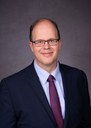 | Kenneth Palmer, Ph.D., Co-Director: 502-852-5773 or 502-224-6011 Clinical Translational Research Building, Room 624 |
|---|---|
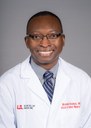 | Dr. Maxwell Boakye, M.D., MPH, MBA, FACS, COOS, CPHQ, Co-Director: 502-407-3276 or 650-380-6601 220 Abraham Flexner Way, Room 1506 |
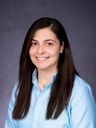 | Rania Gomaa Abdelhay, Program Coordinator HSC Research Tower, Third Floor |
University of Louisville MD/PhD Program Mailing Address:
500 Preston St.
HSC Research Tower, Room 315A
Louisville, KY 40202
Directions: The Health Sciences Center Campus is located in the North Central part of Louisville, near the Ohio River.
PARKING for Medical School Pre-Orientation Visit: Visitor parking is available at the East Chestnut Street garage, located on the corner of E. Chestnut St. and S. Preston Street. Medical School Pre-Orientation takes place in February and is located in the Kornhauser Library Auditorium.
From the North:
1. Take I-65 South to Exit 136 C Jefferson Street/Downtown/Brook Street.
2. Stay in the far left hand lane of the ramp for Brook Street.
3. At the end of the ramp, follow Brook Street one block north to East Market Street and turn right.
4. Go one block on Market and turn right on South Floyd Street.
5. Go four blocks and turn left on East Chestnut Street. The parking garage is on your right at 414 East Chestnut Street.
From the East or West: Take I-64 or I-71 to I-65 South and follow the directions above.
From the South:
1. Take I-65 North to Exit 136 A Broadway/Chestnut St. This ramp exits onto South Brook Street.
2. Continue on South Brook Street for two blocks.
3.Turn right on East Chestnut Street and continue past South Preston Street. The parking garage is on your right past the pedway at 414 East Chestnut Street.
 Facebook
 Twitter
 Linkedin