Louisville, KY - The James Graham Brown Cancer Center at the University of Louisville in Kentucky and Arcturus Bioscience, Inc. announced today the results of a collaborative study during which they performed the first large retrospective study of gene expression profiles from pure populations of breast cancer cells. This research involved a global survey of genes activated in invasive breast cancer tumor cells isolated from archived biopsy samples.
The results of this study will be presented today at the San Antonio Breast Cancer Symposium (SABCS) at 10:45 a.m. in Ballroom C during General Session 4. The oral presentation will focus on a paper co-authored by the Brown Cancer Center and Arcturus researchers entitled: “Gene Expression Signatures Associated with Clinical Outcome in Breast Cancer via Laser Capture Microdissection”. The study will also be presented Saturday, December 6, 2003 at the 2003 Jensen Symposium in Cincinnati, OH during the “Hot Topics” session beginning at 10:30 a.m.
In the joint study, the researchers analyzed 300 biopsies from the extensive biorepository of breast cancer tumors collected by James L. Wittliff, Ph.D., M.D. hc, a professor of biochemistry and molecular biology at the James Graham Brown Cancer Center at the University of Louisville and co-principal investigator of the study. These samples, collected over the past 18 years from patient volunteers treated at hospitals throughout Kentucky, were frozen immediately after surgery and archived to preserve the DNA and RNA within the samples.
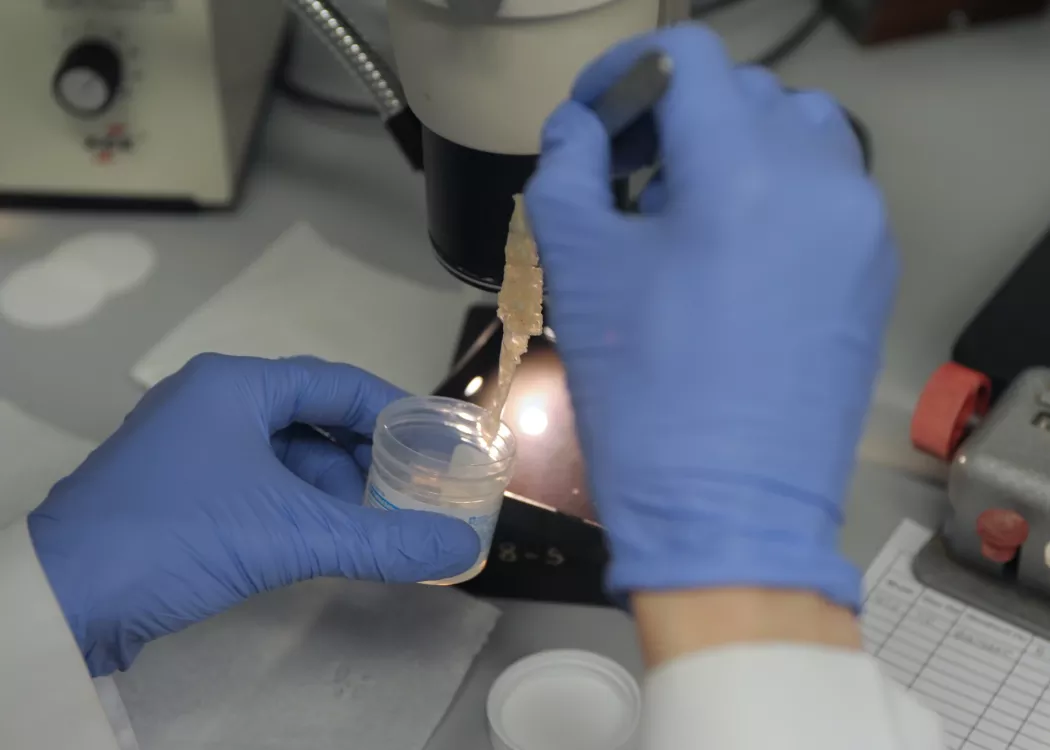
Wittliff, working with Arcturus scientists, identified and precisely isolated pure populations of tumor cells from these biopsy samples using Laser Capture Microdissection (LCM) instrumentation developed by Arcturus. Analysis based on pure populations of tumor cells ensures that results are not distorted by mixing cancer and non-cancer cell types, a shortcoming of previous studies.
Using extraction and amplification reagents and custom DNA microarrays designed by Arcturus, the researchers measured which of nearly 22,000 profiled genes were active, or expressed, within the microdissected tumor cells. Specific sets of genes within cancer cells are active when a tumor develops, giving rise to rapid growth and proliferation of the cells, as well as invasion by the tumor into surrounding healthy tissue.
By matching the resulting genetic information with clinical and follow-up data for each patient from the Kentucky Tumor Registry, the researchers discovered important gene expression signatures which may lead to tests that can identify patients with a greater probability of responding to hormone therapy, determine patients with a higher likelihood of tumor recurrence, and diagnose more aggressive tumors at earlier stages than can be done presently.
The incredible combination of a well-controlled specimen collection, associated tumor marker results and patient follow-up, with the Arcturus genomic technology, provides one of the first real insights into clinically relevant gene expression patterns of breast cancer cells,” said Donald M. Miller, M.D., Ph.D., director of the James Graham Brown Cancer Center and distinguished professor of oncology at the University of Louisville. “The approach described appears ready to test in a multi-institutional cooperative clinical study.”
The results presented at the SABCS represent the most complete and accurate gene expression survey to date of pure populations of breast tumor cells,” noted Mark G. Erlander, Ph.D., co-principal investigator and chief scientific officer of Arcturus Bioscience, Inc. “We believe that our collaboration with the Brown Cancer Center at the University of Louisville will provide greater insight into the genes responsible for invasive breast cancer and may provide the basis for new molecular diagnostic tests which will assist physicians in selecting the most appropriate treatment for each patient.”
Understanding which genes differentiate patients and their expected clinical outcomes may also enable the development of more effective anti-cancer drugs.
One of the most promising products of this collaboration is the demonstration that routine surgical biopsies, properly processed in pathology, may be analyzed easily by LCM and microarray technology to reveal clinically important aspects of breast cancer behavior,” Wittliff explained. “It is highly likely the gene expression signatures that correlated with clinical outcome in our study contain the next generation of targets for drug design.”
Arcturus Bioscience contact: Nancy Westcott, nwestcott@arctur.com, 650-962-3020, Ext 376.