
About The Investigator
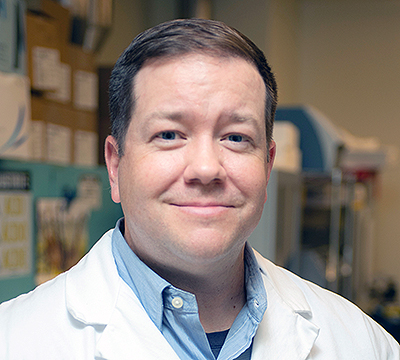
Joshua Hood, MD, PhD
Associate Professor
of Pharmacology & Toxicology
Department of Pharmacology & Toxicology
Education
- B.Sc.: Centre College
- M.D.: University of Kentucky
- Ph.D.: University of Kentucky
Exosomes as Biomarkers for Hepatocellular Carcinoma
Overview
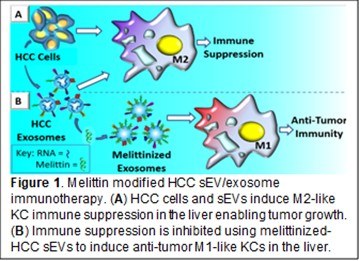
In HCC, myeloid derived suppressor cells (MDSCs), maintain perpetual tumor immune suppression that antagonizes traditional treatment efficacy. A primary means of achieving this suppression is via activating M2-like immunosuppressive Kupffer cell (KC) macrophages (Mφs).
Our previous studies demonstrate that melanoma-derived small extracellular vesicles (sEVs), formerly termed “exosomes,” can directly induce a pro-tumor M2-like Mφ phenotype in immortalized cells line.
Intriguingly, we found that the sEVs could be modified with the bee venom protein, melittin, to induce anti-tumor M1-like Mφs. Investigations into the influence of HCC sEVs or derivative therapies on KC or primary Mφ polarization processes have not been conducted.
KCs are an ideal immunotherapeutic target given their role in removing foreign nanomaterials as participants in the mononuclear phagocyte system, coupled to their inflammatory role in HCC, hepatitis, alcoholic and non-alcoholic steatohepatitis, and liver fibrosis.
This project will formulate and test melittin-modified HCC sEV induction of M1 Kupffer cells in vitro and in vivo.
Hypothesis
Chronic alcohol-induced alterations in hepatic HATs and HDACs drive pathogenic posttranslational modifications of histones and non-histone proteins upregulating CC- and CXC-chemokines expression contributing to liver inflammation and injury.