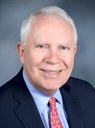
Allan Tasman, M.D.
Professor and Chairman, Department of Psychiatry and Behavioral Sciences
Email Dr. Tasman
Dr. Allan Tasman, Professor and Chairman of the Department of Psychiatry and Behavioral Sciences at the University of Louisville since 1991, Allan Tasman completed undergraduate work at Franklin & Marshall College, medical school at the University of Kentucky and psychiatric residency at the University of Cincinnati where he was chief resident. He also is a graduate of the Western New England Psychoanalytic Institute. As a faculty member at the University of Connecticut from 1976-91, he gained a national reputation through his service as Director of Medical Student Education and Psychiatry Residency Training, and as Associate Chairman for Education. He has received several national awards for both medical student and resident educational excellence. He also is a past winner of the U of L Residents Strauss Award for Psychotherapy Supervisor. His research, using computerized electroencephalography brain mapping techniques, has focused on the neurophysiology of cognitive processes, especially related to depression, the risk for development of alcoholism, and autism. His clinical interests focus on integrated treatment of depression and anxiety disorders. He spearheaded the establishment of the UofL Depression Center, one of 16 founding members of the National Network of Depression Centers. In 2003, he received the University of Louisville President’s Award for Distinguished Faculty Service, and the Kentucky Medical Association’s Educational Achievement Award. In 2007, he was made a fellow of the Royal College of Psychiatrists of the United Kingdom. He received the Kentucky Psychiatric Association St. Clair Award for Service to the Profession in 2007. In 2008, he received the University of Kentucky College of Medicine, Distinguished Alumnus Award.
He was president of the American Association of Directors of Psychiatric Residency Training and of the Association for Academic Psychiatry, and served as president of the American Association of Chairs of Departments of Psychiatry for two terms. He is the only individual to have served as president of each of these three major US academic psychiatry organizations. In the American Psychiatric Association he served as Scientific Program and Chairman, Vice President, and President. In 2005, he was elected to a six-year term as Secretary for Education of the World Psychiatric Association. As Secretary for Education for the WPA, he also serves on the organization’s executive committee and chairs the committee that makes educational policy recommendations worldwide. Recent projects include development of global standards for medical student and resident education in psychiatry, and global public education about psychiatric illnesses and treatment. He also is the immediate Past President of the Pacific Rim College of Psychiatrists, an international academic organization representing all countries of the Pacific Rim. In that position, he founded the journal Asia-Pacific Psychiatry, published by Wiley-Blackwell.
He has authored or edited 32 psychiatric textbooks and monographs, over 200 peer-reviewed publications, chapters, and abstracts, and numerous national and international presentations. He is senior editor of the first, second, and third editions of a comprehensive textbook, Psychiatry, called “the best current textbook of psychiatry” by the New England Journal of Medicine and the “gold standard” by the American Journal of Psychiatry. The third edition was published in 2008. His book, The Doctor-Patient Relationship in Pharmacotherapy was published in 2000. Three textbooks, Essentials of Psychiatry, Clinical Guide to DSM IV-TR Disorders, and Handbook of Psychiatric Medications were published in 2006. Clinical Guide to DSM IV-TR Disorders, 2nd edition was released in 2009.
He runs year-long seminars in psychotherapeutic principles applied to inpatient and emergency clinical practice for PGY-1 and PGY-2 residents. In addition, he is faculty supervisor for the ACB outpatient clinic patient evaluation conference and teaches the PGY-3 post Freudian Psychoanalytic Theory seminar. He supervises 4-6 residents per year in psychodynamic psychotherapy.