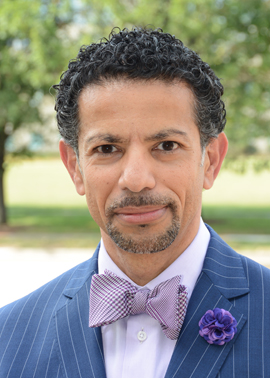
You are here: Home Faculty G. Rafael Fernandez-Botran, Ph.D.

G. Rafael Fernandez-Botran, Ph.D.

by tamurr02 last modified Apr 01, 2009 10:03 AM

G. Rafael Fernandez-Botran, Ph.D. page

Faculty banner

G. Rafael Fernandez-Botran, Ph.D.

G. Rafael Fernandez-Botran, Ph.D.
Associate Professor

Graduate School
University of Kansas Medical Center, 1985, Ph.D.

Post-Doctoral Education
1985-1992 Department of Microbiology, The University of Texas Southwestern Medical Center at Dallas.

Research Interests
Cytokines, potent regulatory proteins produced by leukocytes and other cell types, play a central role in both health and disease by mediating many physiologic processes, including inflammation, hemopoiesis and immune responses. The research goals of our laboratory are to understand the mechanisms that control the activity of cytokines in vivo and to develop novel immunotherapeutic approaches to the treatment of disease, based on the inhibition or enhancement of cytokine activity. Current projects in our laboratory are:

Targeting glycosaminoglycan-cytokine interactions as an immunotherapeutic approach. Interactions between cytokines and glycosaminoglycans (GAGs) on cell membranes or the extracellular matrix are important in the development of local inflammation and immune responses and may constitute a valid target for anti-inflammatory or immunomodulatory therapies. Currently, the effects of inhibitors of cytokine-GAG interactions are being studied in several experimental animal models, including cardiac arrest-induced brain damage, and peritoneal inflammation.

Immunoregulatory effects of gangliosides and potential role in immune escape mechanisms by tumor cells. Gangliosides are sialic acid-containing glycolipids found in the plasma membranes of all cells, but particularly enriched in the central nervous system and in certain tumor cells. Gangliosides have immunosuppressive activities and may be responsible for tumor-induced immunosuppression. Our laboratory is investigating the mechanisms responsible for the suppressive effects of gangliosides, particularly their effects on the normal differentiation of helper T cells and cytokine receptor signaling.

Mailing Address
Department of Pathology and Laboratory Medicine
University of Louisville
Louisville, KY 40292

Office 502) 852-5375
Fax (502) 852-1177
Email: grfern01@gwise.louisville.edu

Document Actions