Personal tools
You are here: Home plan2020 Enhance the Learning Environment
Document Actions

Enhance the Learning Environment

Classroom and online learning environments rely on instructional technology to support the production of instructional resources and the delivery of instruction. Instructional technology includes:

  • Audio and video presentation equipment
  • Presentation control systems including central monitoring
  • Interactive video conferencing systems
  • Recording facilities (for use in creation of pod casts and streaming video)
  • Virtual learning environments and community software

Investments in instructional technology infrastructure are necessary to help students develop the technical skills needed to succeed in their chosen disciplines and professions. Given workforce expectations, services need to be provided to prepare students to be information savvy knowledge workers. Information technology has a role in retention efforts by enhancing the classroom experience to meet various learning styles as well as providing opportunities to review lectures and materials outside of the classroom.

In the future, the role of technology in instruction and learning will continue to grow. Expansion of online learning will be central to the new economy in which people change careers at an increasing pace. Many of the top ten careers in 2010 will not have existed in 2004. Over the next decade, learning technology will continue to develop:

  • recording and production of multi-media materials will become more common in the classroom
  • use of wireless for interaction (such as clickers) will expand
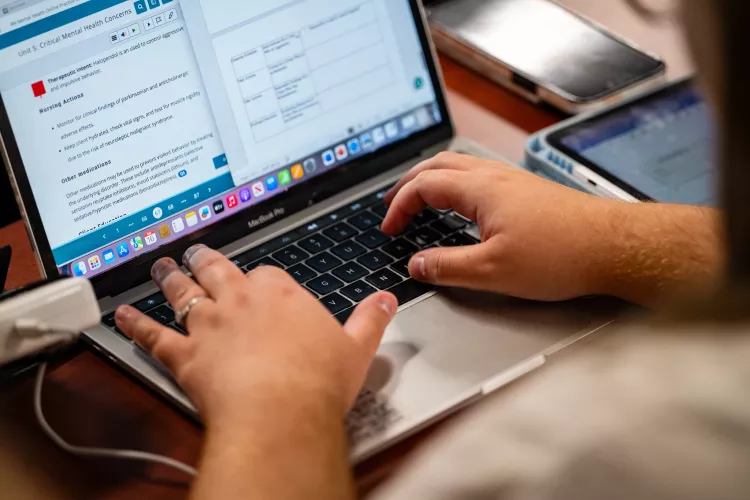
  • use of laptops and handheld devices in the classroom will be more common
  • use of online resources, especially multi-media, will continue to grow
  • online communities using “virtual reality” will develop in creative ways (such as Second Life)

These activities will require additional resources and IT services, especially disk storage and wireless network bandwidth. Quotas and resource allocations will need to grow to meet these demands.

IT Goal I: Improve the use of instructional technology

a. Expand the use of technology in classroom instruction. Classroom technology must be uniformly available across all campuses, and must incorporate state-of-the-art equipment based on university standards. All classrooms should have multimedia equipment, and ongoing funding is required to keep equipment current.

  • Information Technology should be involved in the design and provision of technology for classrooms in new construction and renovation projects, such as in Museum Plaza and the Haymarket development.
  • IT should work closely with Purchasing and the Delphi Center to develop standards to design, acquire, install, configure, maintain and repair classroom technology to insure best performance, economy, and ease of use.
  • IT should partner with the unit responsible for classroom scheduling to unify the scheduling and support processes and insure appropriate instructional technology assets are always available, in good working order and ready for use by the faculty.
  • IT should partner with the Delphi Center to create a model classroom or repository of technology assets for the exploration of new presentation technologies and prototyping of new teaching techniques.
  • IT should add classroom repair and installation services to increase speed and reduce costs associated with the installation, maintenance and repair of classroom technology.

b. Expand support for creation and delivery of “on demand” learning materials. Pod casts, video casts, news feeds and other information can be a valuable supplement to courses. The university should facilitate production and distribution of these materials, and should provide support to make it feasible and economical for faculty and students to use.

  • Classrooms should be equipped with audio and video capture technology to enable creation of these materials.
  • IT should provide support for content management systems, such as iTunes U, that support media storage and distribution.
  • IT should make equipment available to faculty and students for production of learning materials.

c. Improve support for teaching and learning. The Delphi Center is the key support group to provide resources and training for faculty. Information Technology should partner with the Delphi Center on initiatives that support the teaching and learning activities of both faculty and students.

d. Participate in strategic initiatives that support increased graduation rates. IT should provide support for strategic university initiatives such as STEM that seek to increase graduates in areas of science, technology, engineering, and mathematics.

e. Pursue grants in support of instructional technology and infrastructure. IT should partner with academic and support units to apply for grants to expand technology infrastructure and services.

f. Facilitate the teaching of “visual literacy.” Information Technology should work with REACH, the Delphi Center, and the Libraries to promote visual, computer and information literacy. To further this aim, IT should provide sufficient technology and human resources to assist students and faculty in the acquisition, manipulation, transformation and distribution of images and sounds for the purposes of teaching, learning and sharing of information.

g. Support UofL’s Quality Enhancement Plan (QEP). The university’s “Ideas to Action” plan focuses on developing critical thinking skills in the student population. Information Technology should provide academic technology and assistance whenever possible to support this key SACS initiative. As IT refocuses on research and the student experience, Information Technology can provide an on-campus venue for students to pursue learning experiences requiring critical thinking within a work environment of critical thinkers and daily problem solvers. Tapping the technical proficiency and enthusiasm of students, IT would provide third and fourth year “culminating experiences” for student interns by partnering with academic departments, libraries, the Delphi Center, and REACH. IT would provide a service environment and professional staff expertise to co-op experiential learning requiring critical thinking.


Powered by Plone CMS, the Open Source Content Management System

This site conforms to the following standards: